Veteran music executive raises loud alarm over high artist fees and failing live shows
On August 5, 2026, music promoter PaulO declared Afrobeats dead due to unsustainable artist fees. He confirmed that out of thousands, only ten musicians make actual profit. The executive warned that expensive bookings now prevent brands from sponsoring major live summer concerts.

A major panic now grips the Nigerian music space. Fans feel deep shock after a top executive shared a very grim update on August 5, 2026.
”AfroBeat Is Dead 💔 Or Coma 💔💔💔😭😭😭 2026,” the veteran promoter posted.
Paul Okoye acts as a leading voice in the African music business. He currently manages major international bookings for top stars. This sudden outburst points to a huge hidden market crisis.
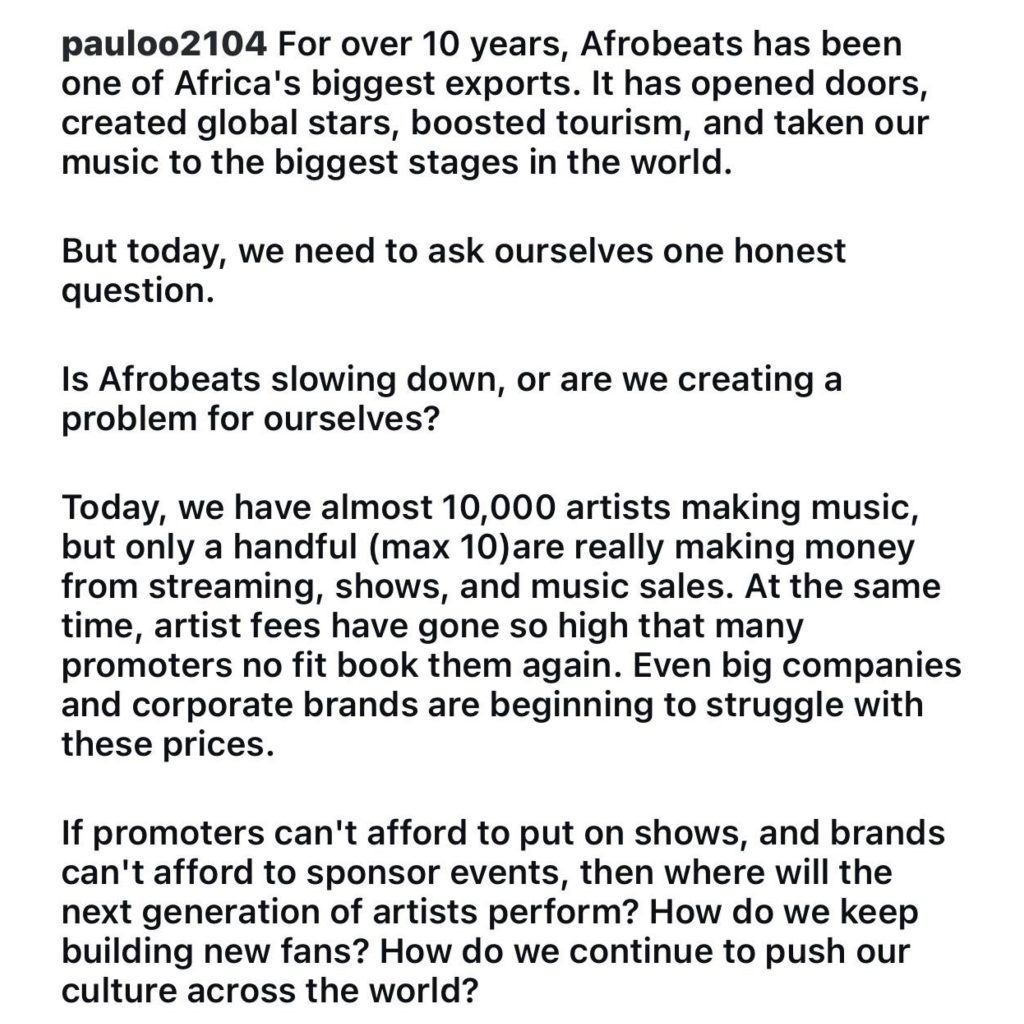
”For over 10 years, Afrobeats has been one of Africa’s biggest exports. It has opened doors, created global stars, boosted tourism, and taken our music to the biggest stages in the world,” the event organizer stated.
Unfair wealth gap
The crisis runs very deep within the vibrant creative sector. Most young talents currently face huge financial walls.
”But today, we need to ask ourselves one honest question. Is Afrobeats slowing down, or are we creating a problem for ourselves?” the businessman asked.
A shocking wealth gap now defines the entire global movement. Very few creatives actually earn true profit from their art. Top experts frequently analyze modern music streaming trends with deep concern.
”Today, we have almost 10,000 artists making music, but only a handful (max 10)are really making money from streaming, shows, and music sales,” the industry leader revealed.
Rising performance costs now destroy basic local event planning. Show organizers simply lack the required funds to book major acts.
”At the same time, artist fees have gone so high that many promoters no fit book them again. Even big companies and corporate brands are beginning to struggle with these prices,” the show promoter explained.
Future talents might soon lose vital physical performance platforms. Corporate sponsors also plan to cut their huge entertainment budgets entirely. This trend threatens future global cultural exchange missions.
”If promoters can’t afford to put on shows, and brands can’t afford to sponsor events, then where will the next generation of artists perform? How do we keep building new fans? How do we continue to push our culture across the world?” the cultural icon questioned.
Missing summer concerts
Live events hold the true core of this massive genre. Fans usually expect huge stadium tours during this warm season.
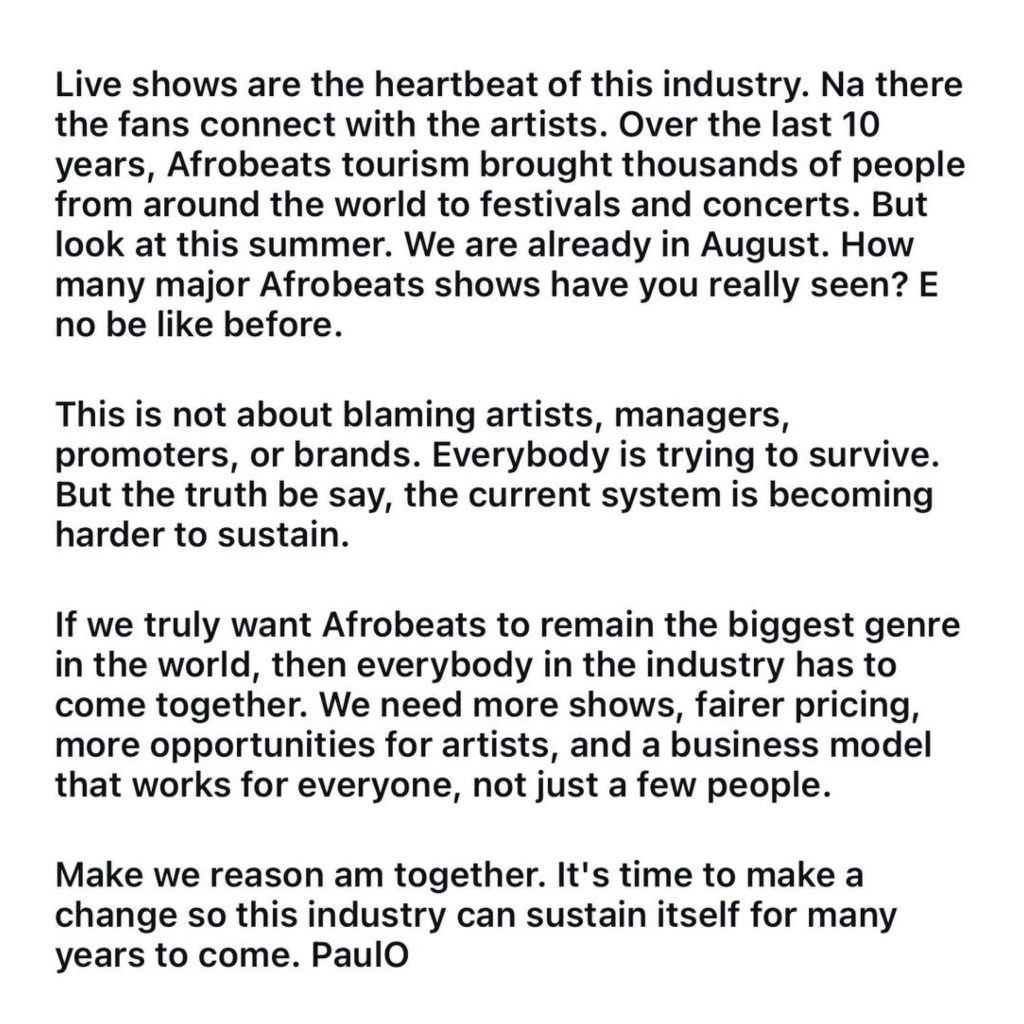
”Live shows are the heartbeat of this industry. Na there the fans connect with the artists,” the talent manager noted.
Music tourism previously generated huge revenues for the local economy. Visitors often fly across oceans just to attend these gatherings. However, this current year looks completely empty and dry.
”Over the last 10 years, Afrobeats tourism brought thousands of people from around the world to festivals and concerts. But look at this summer. We are already in August. How many major Afrobeats shows have you really seen? E no be like before,” the booking agent lamented.
The promoter avoids placing direct blame on any specific group. Everyone simply tries to survive a very harsh global economy.
”This is not about blaming artists, managers, promoters, or brands. Everybody is trying to survive. But the truth be say, the current system is becoming harder to sustain,” the frustrated executive declared.
A call for change
Real survival demands urgent unity among all key market players. Leaders must immediately build a much fairer collective financial structure. This action will secure long-term success for all young creators.
”If we truly want Afrobeats to remain the biggest genre in the world, then everybody in the industry has to come together. We need more shows, fairer pricing, more opportunities for artists, and a business model that works for everyone, not just a few people,” the seasoned veteran advised.
The entire ecosystem must now pause and rethink its path. A quick mutual agreement will surely prevent a total collapse.
”Make we reason am together. It’s time to make a change so this industry can sustain itself for many years to come. PaulO,” the visionary concluded.