Key Points
- Judge Cecilia Altonaga throws out the defamation count on notice grounds. The jury’s finding on two other claims still stands.
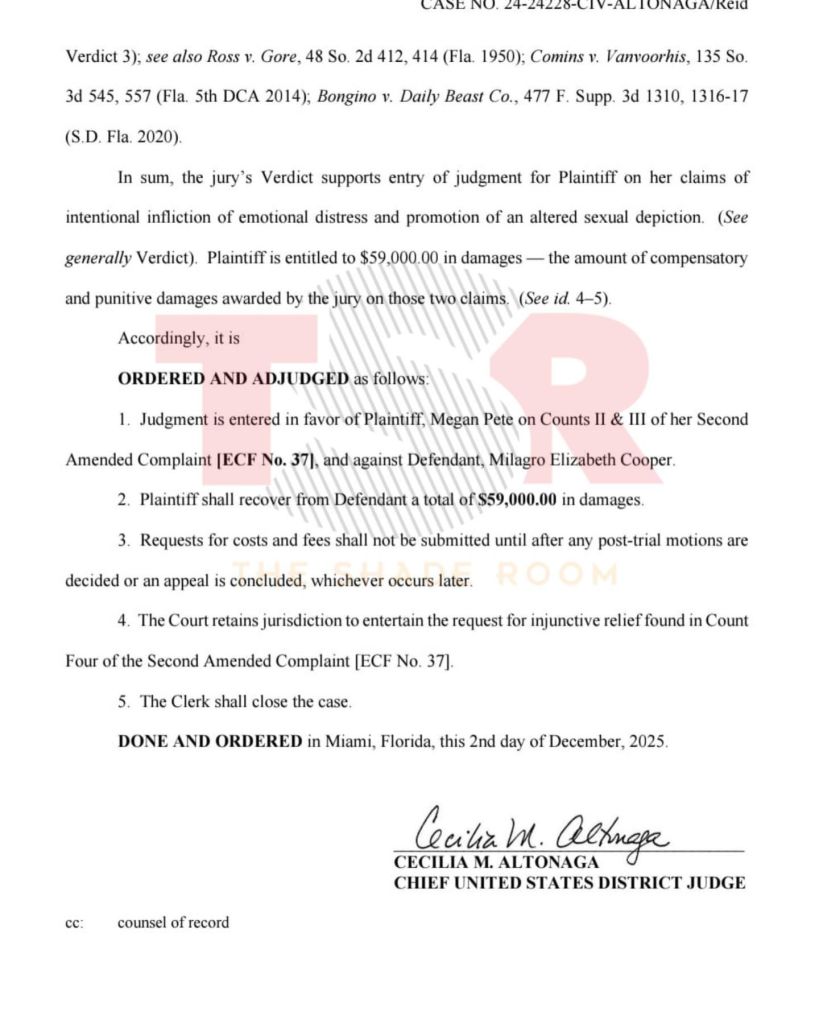
- Milagro Gramz now owes Megan Thee Stallion fifty nine thousand dollars. The original jury award of seventy five thousand is reduced.
- The court keeps power over any future orders and fee claims. Lawyers may still fight over extra costs and possible appeals.
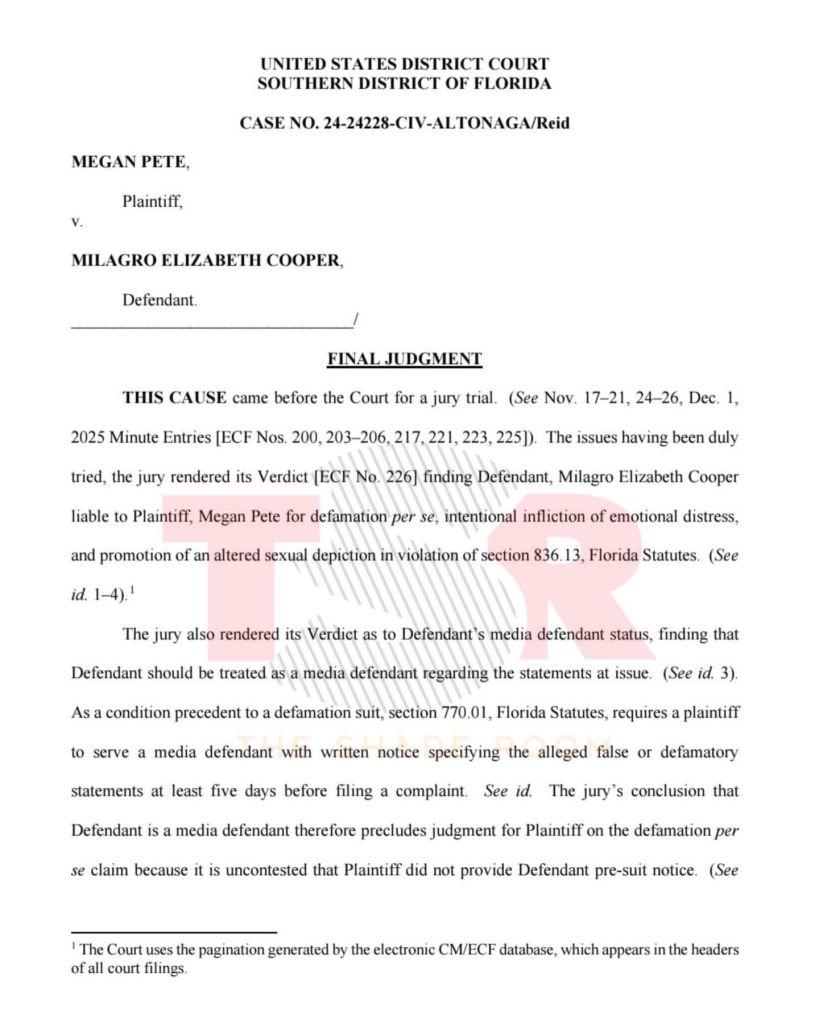
Rapper Megan Thee Stallion (Megan Pete) has scored a mixed but important win in her civil case against blogger Milagro Gramz (Milagro Elizabeth Cooper) in federal court in Miami. A new ruling from Chief Judge Cecilia Altonaga trims the jury’s decision yet still holds the blogger liable for serious harm. The total payout to the star now stands at fifty nine thousand dollars.

The judgment comes days after a jury said Cooper was responsible on three different claims tied to harsh online posts and a deepfake clip of the rapper. Their original award of seventy five thousand dollars in damages was widely reported, including in an earlier Miami jury verdict story. Judge Altonaga has now reshaped that outcome after looking closely at Florida media law.
Judge tosses defamation count
In her written order, the judge agreed that Cooper should be treated as a media figure for the purpose of this case. Once the jury reached that view, a special Florida rule came into play. Section 770.01 of the state code says anyone suing a media defendant for libel must first send a written notice at least five days before filing their claim in court.
The ruling notes there is no proof that Megan or her lawyers sent that kind of warning before bringing the case. Because of that missing step, Judge
Altonaga said the court could not enter final judgment on the defamation count. The jury’s view of the facts remains on record, but the judge could not let that specific claim stand as a legal win.
Legal watchers say the move does not clear Cooper of blame. Instead, it shows how strict rules around media cases can shape the final result. The judge did not question the jury’s belief that false words were used. She simply applied the notice rule, which is meant to give news outlets or bloggers a brief chance to correct errors before a lawsuit lands.
Emotional distress and deepfake findings remain
While the libel count fell away, Megan still kept two big victories. Judge Altonaga entered judgment for her on intentional infliction of emotional distress. She also backed the jury’s finding that Cooper helped promote an altered sexual video that showed the rapper’s likeness. Together, those two claims now support the final award of fifty nine thousand dollars.
Court papers say the money covers both normal and extra damages on those surviving counts. The deepfake clip and long run of online posts were central parts of Megan’s story at trial. Earlier this year, a separate report on Megan’s treatment stay revealed how she sought help after years of online hate linked to the same video. The new judgment underlines that the court accepted her account of serious mental and career harm.
Megan’s legal team has argued that the blogger helped fuel a wave of doubt and mockery after the 2020 shooting case involving Tory Lanez. Jurors heard that Cooper’s streams and posts pushed claims the rapper says were never true. In one part of the suit, Megan accused Cooper of sharing or boosting a fake adult clip that used her face on another person’s body.
The court agreed that this kind of conduct crossed a clear line. By keeping the emotional distress and altered sexual depiction claims in place, Judge Altonaga signalled that the harm from targeted online attacks can have real legal weight. The ruling also serves as a warning to other content creators who build audiences by attacking famous people with false or doctored material.
What happens next in the case
Although the main money figure is now set, the fight may not be over. Judge Altonaga’s order says that any fresh requests for legal fees or extra costs must wait. Lawyers can only file those papers after all post-trial motions are decided, or once any appeal ends, whichever comes later. That means both sides could still battle over who pays which bill.
The court also kept jurisdiction to consider a separate request for an order that could restrict future posts linked to the case. That issue was raised in one of Megan’s remaining claims and may return to the judge’s desk. For now, however, the clerk has been told to close the file.
Megan has framed the verdict as a message to people who use social media to tear others down. Cooper, on the other hand, has tried to spin the ruling as a smaller loss than first reported. The final judgment shows that while one technical rule cut the headline number, the core finding still stands. A federal court has now confirmed that the blogger’s conduct caused real harm and carries a real price.