Story Highlights
Labour Party leader Peter Obi called for an immediate suspension of Nigeria’s controversial new tax laws on January 14, 2026. He cited a KPMG report identifying 31 critical errors and argued that enforcing unclear regulations without public consensus amounts to government extortion.

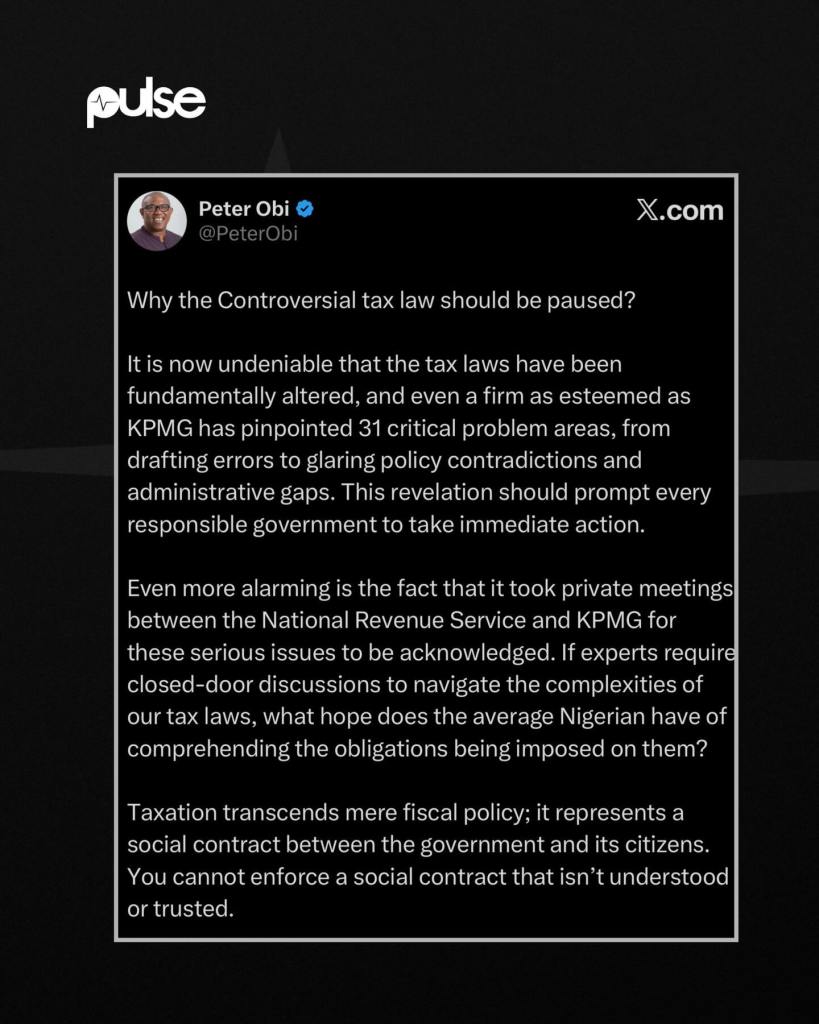
Former presidential candidate Peter Obi has urged the Federal Government to suspend the implementation of the controversial new tax laws immediately.
The Labour Party chieftain released a scathing statement on January 14, 2026, pointing to severe drafting errors and policy contradictions that experts warned could cripple the economy.
Obi referenced a review by global accounting firm KPMG which identified 31 critical problem areas within the new fiscal regime.
These issues range from fundamental drafting errors to administrative gaps that the government has yet to address publicly.
KPMG report reveals 31 critical gaps
The opposition leader expressed alarm that private meetings between the National Revenue Service and KPMG were necessary to acknowledge these flaws.
He argued that if experts require closed-door sessions to understand the law, the average Nigerian has no hope of comprehending their obligations. This lack of clarity complicates matters for citizens already confused by tax laws 5 things you must know about the gazette alteration.
The former governor insisted that responsible governance demands immediate action to rectify these inconsistencies before enforcement begins.
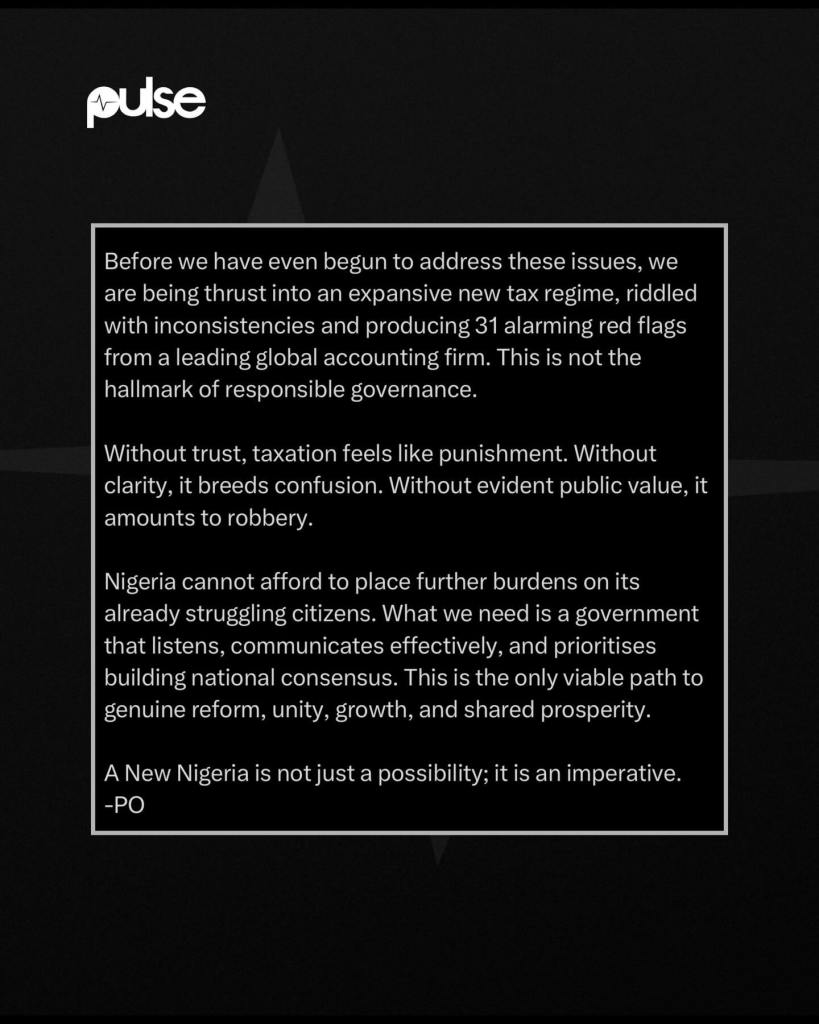
Obi stated that thrusting an expansive tax regime riddled with red flags upon the populace is not a hallmark of leadership.
Social contract vs extortion
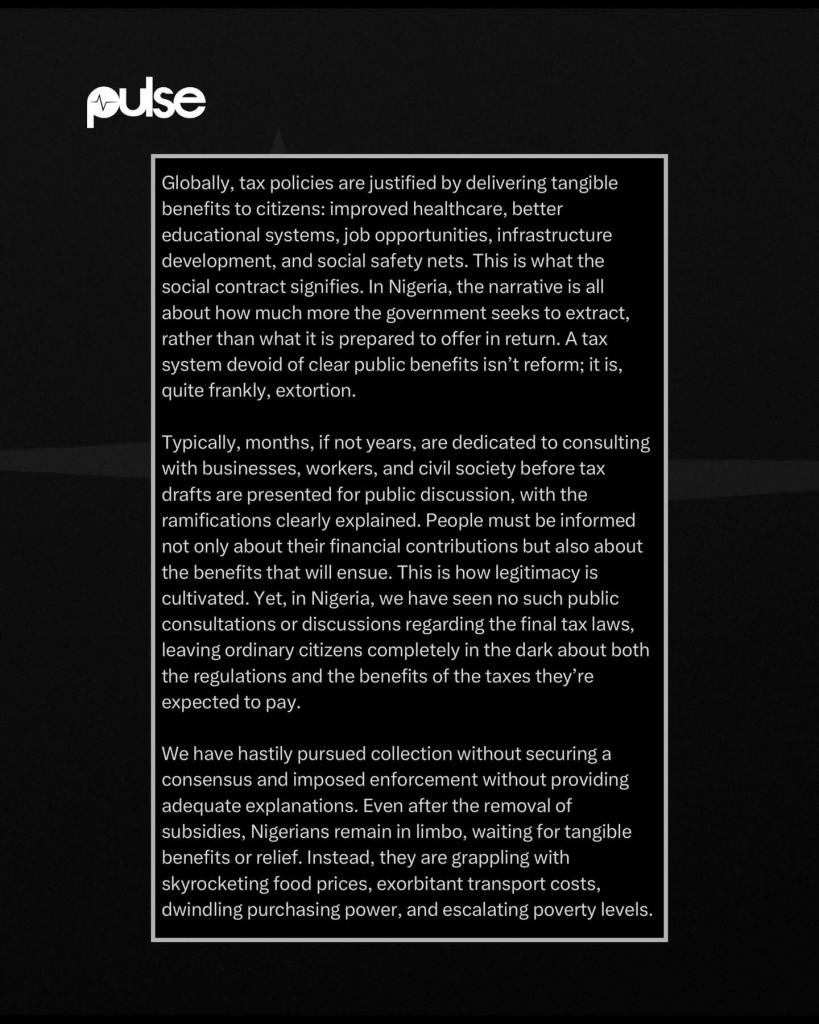
Obi further criticized the administration for prioritizing revenue extraction over public service delivery. He noted that tax policies globally gain legitimacy by funding tangible benefits like healthcare, education, and infrastructure.
The current system in Nigeria, however, focuses on how much the government can take rather than what it offers in return.
This aggressive collection drive continues even as debates rage regarding income earned by runs girls becomes taxable under new law. According to Obi, a tax system devoid of clear public benefits represents extortion rather than reform.
Lack of public consultation
The statement highlighted the absence of broad consultations with businesses, workers, and civil society before the laws were finalized.
Obi observed that typical democratic processes involve months of discussion to secure consensus and explain the ramifications to the citizenry.
Nigerians remain in the dark about both the regulations and the benefits despite the removal of subsidies.
The Labour Party leader warned that enforcing a social contract that citizens neither understand nor trust will only breed confusion and resentment.
He concluded that genuine reform requires a government that listens and prioritizes national consensus over hasty collection.