Key Points
- Court rules Akwa Ibom Ekpo arrest was unlawful and harsh. Judge orders his release and says worship rights remain protected.
- Case follows governor’s clampdown on masquerades parading on busy streets. Police earlier picked Effiong in full costume as clips trended.
- Court also awards money against the state for rights breach. Ruling sparks new debate on culture safety and street worship.
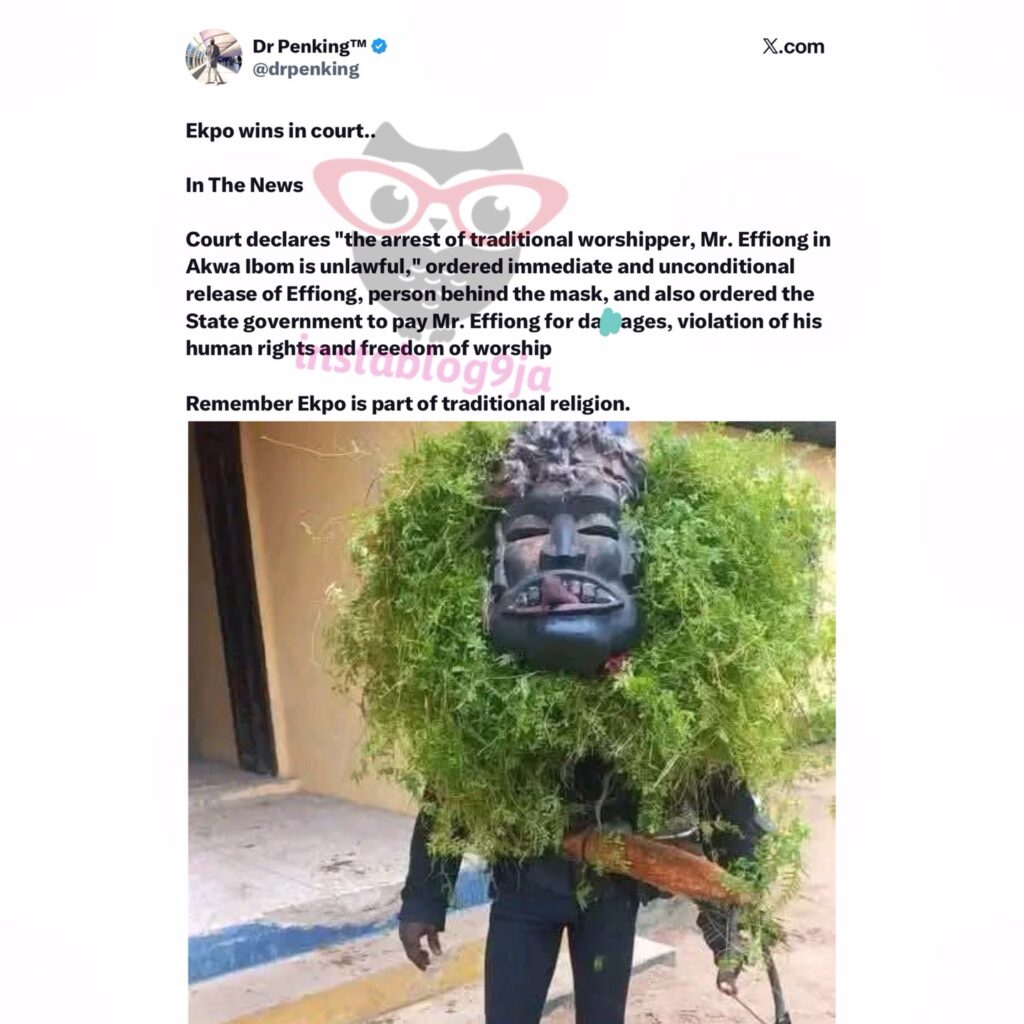
There is fresh joy in Akwa Ibom this week. A state high court has ruled his arrest was unlawful. He was the man behind the Ekpo masquerade costume online.

Effiong’s case began after Governor Umo Eno ordered arrests. He warned that masked groups on major roads would face charges. ValidUpdates covered that order in its Akwa Ibom masquerade faces arrest report.
Days later, police picked Effiong while he walked in full Ekpo dress. Video from the station showed him surrounded by officers and curious onlookers. He faced claims of disturbing public peace and blocking free movement.
Judge rules arrest breached his rights
In court, the judge agreed that the arrest crossed the line. The ruling called him a traditional worshipper protected under Nigeria’s basic rights. The court said, “Ekpo is part of traditional religion”.
The judge held that police should not treat masked worship as crime. He noted there was no proof Effiong hurt anyone that day. The court also frowned at how he was paraded in chains online.
The judgment therefore ordered his immediate and unconditional release from custody. It held that the arrest and detention breached his freedom of worship. The judge reminded the state that every faith deserves equal basic respect.
Beyond the release, the court also awarded money against the state government. It said officials must pay damages for the breach of his rights. That order comes as faith cases grow loud across Nigeria and abroad. ValidUpdates recently covered a US visa restriction policy story on attacks linked to religion.
From viral clip to court win
Effiong’s arrest first drew notice through short clips shared on social media. One video showed him in full palm leaves and mask outside a police unit. Another showed officers leading him into a waiting truck as onlookers joked.
Many viewers laughed at the sight of the “gods” in handcuffs. Others asked if the order left room for peaceful street worship. Traditional leaders soon began to raise wider questions about culture and law.
Health worker and writer Dr Penking later shared a note on X. He wrote that the “arrest of traditional worshipper” in Akwa Ibom was unlawful. He reminded readers that “Ekpo is part of traditional religion”.
Balancing safety laws and street rites
The state government has argued that stricter rules are needed for safety. Officials say some masked groups block roads and frighten drivers and traders. They insist the goal is order, not an attack on faith.
Critics respond that a blanket street ban confuses crime with culture. They point out that Ekpo festivals long predate the modern state. Many say clear rules should guide events instead of open arrests.
Legal experts now expect the government to review the order. Some say new rules could keep streets safe and protect worship. They warn that more court losses may follow if rights are ignored.
For Effiong, the court win marks a sharp turn from fear. He spent days in custody and faced talk of heavy charges. Now he leaves as a free man waiting for the state to pay.
Fans who followed the case online have hailed the judgment. Some shared fresh clips of the masked man dancing with playful captions. Others used the case to call for fresh respect for traditional rites.
Across Nigeria, the debate now goes beyond one Ekpo mask. People are asking how far states can go when culture meets street law. For many, the case shows that even old gods have rights