Key Points
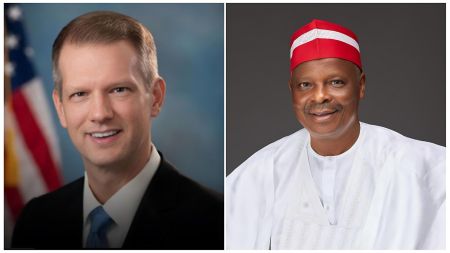
- Trump loyalist Elias Gerasoulis clashes with Bashir Ahmad on X. Their posts follow new US visa steps on religious freedom.
- Gerasoulis claims Nigeria is not a real sovereign country. Bashir calls his view an insult and defends national pride.
- Nigerians argue over pride, faith rights and US pressure. Many recall earlier Trump era threats and new sanctions talk.
An online clash between Trump loyalist Elias Gerasoulis and former presidential aide Bashir Ahmad has stirred fresh debate about Nigeria, the United States and religious freedom.
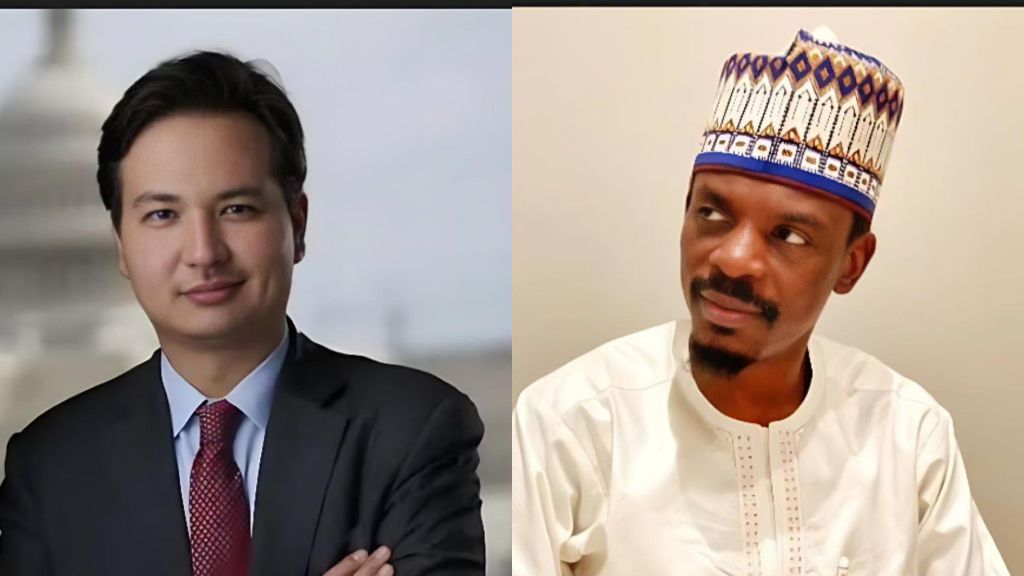
Their sharp exchange on X came as Washington rolled out new visa rules for people linked to faith based attacks in Nigeria.
The war of words also landed days after Trump era style warnings about Christian killings and rights in the country returned to the headlines.
ValidUpdates has already covered that wider row in its Nigeria concern tag defence story. Their new spat now adds a personal twist to the larger diplomatic storm.
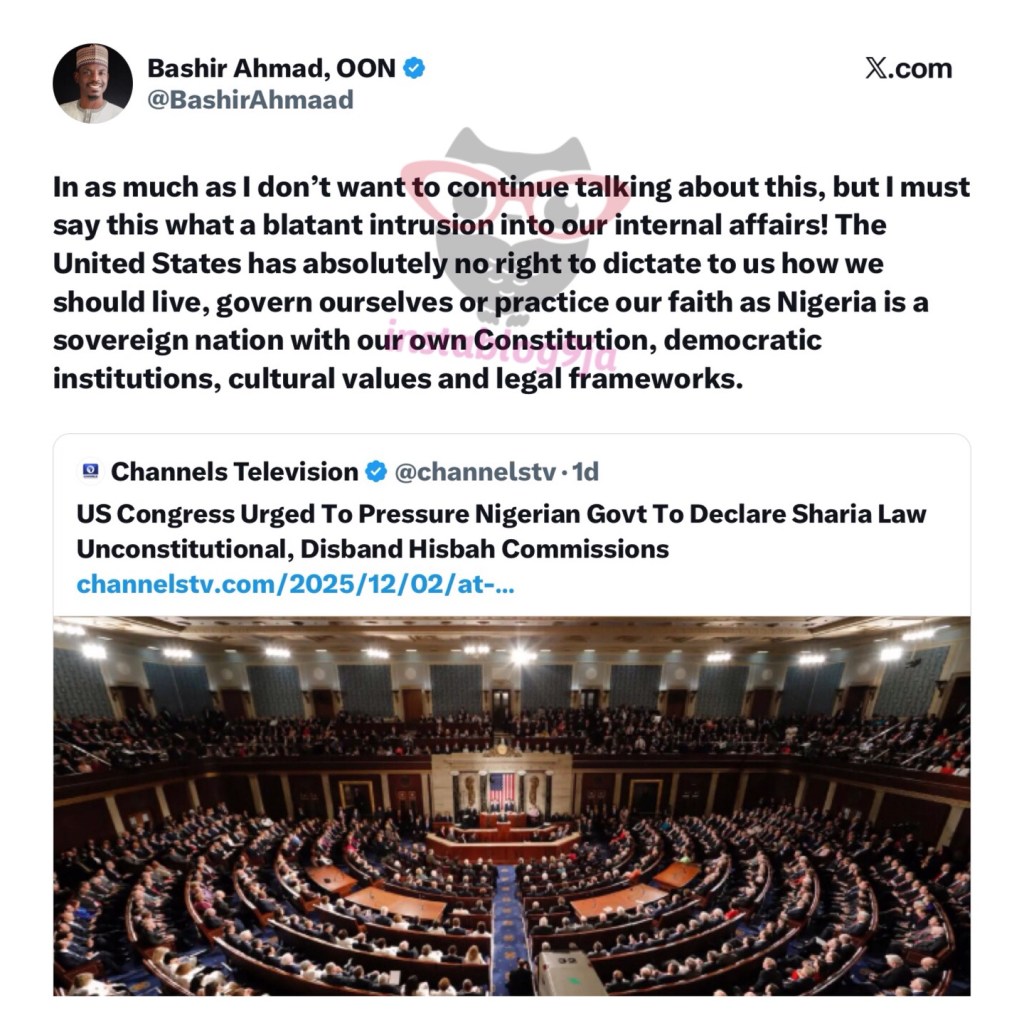
Bashir, who served as media aide to former President Muhammadu Buhari, first shared a Channels Television report on X. The story said US lawmakers were urged to push Nigeria to scrap Sharia law and disband Hisbah religious police in northern states.
Bashir called the move a “blatant intrusion” into Nigeria’s internal affairs and insisted the country would decide how to live and worship.
How the online clash started
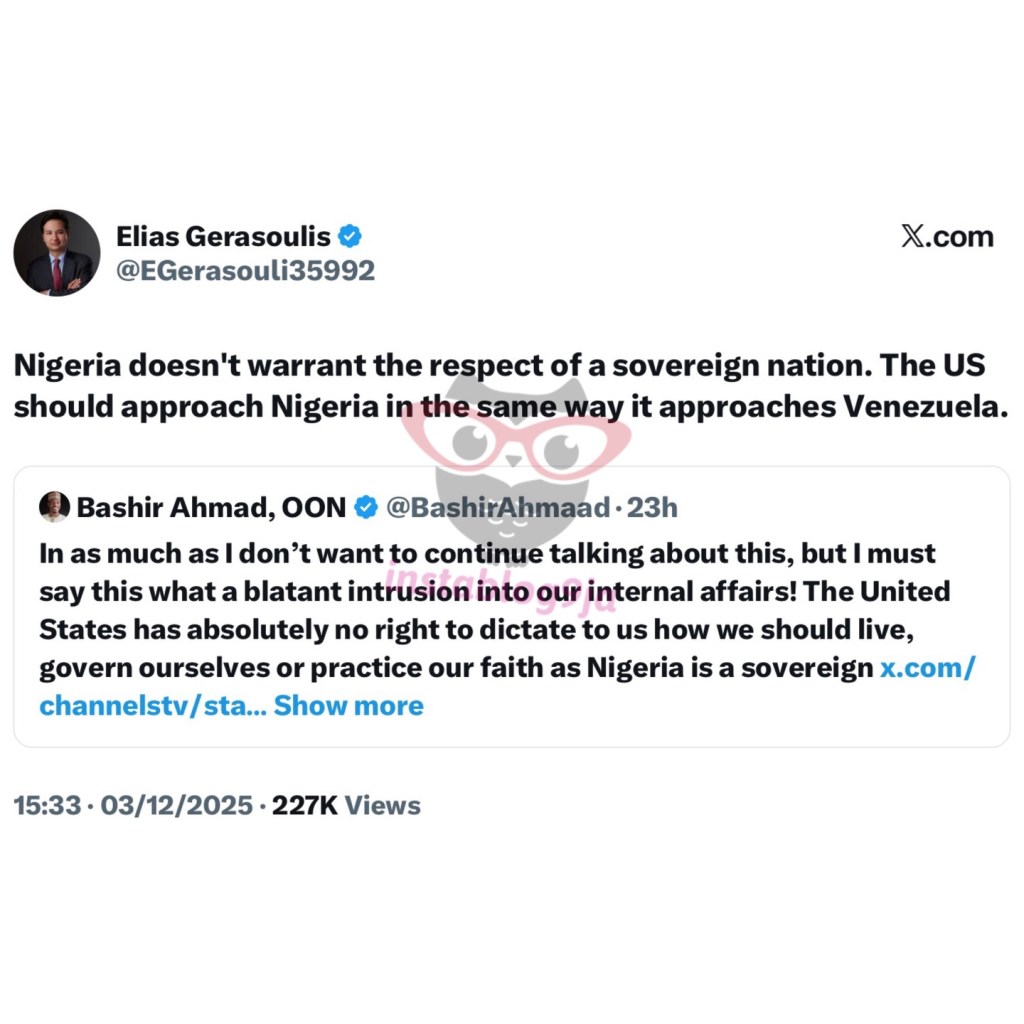
Gerasoulis replied by arguing that Nigeria does not deserve treatment as a proper sovereign state. He urged Washington to deal with Nigeria “the same way” it handles Venezuela.
His post quickly spread and drew angry replies from Nigerians who said the message insulted their flag and people.
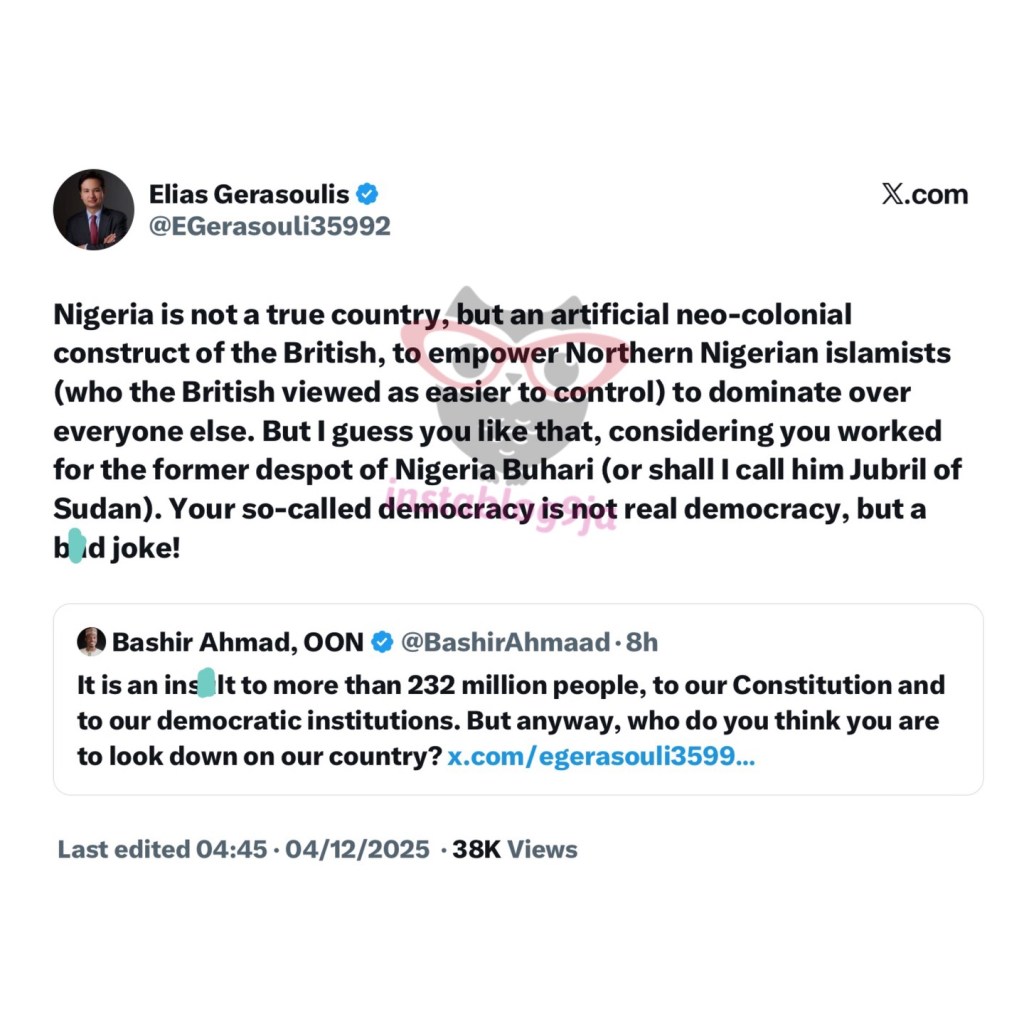
Bashir fired back in another post and called the statement an insult to more than 232 million citizens. He said the comments also disrespected the constitution and democratic bodies. He then asked Gerasoulis who he thought he was to look down on an independent country.
Rather than step back, Gerasoulis posted a longer message that cut even deeper. He described Nigeria as a “British made” construct designed to empower northern Muslim leaders over everyone else.
He mocked Bashir for working with Buhari and dragged in the old “Jubril of Sudan” conspiracy theory about the former president. He ended by calling Nigeria’s democracy a “bad joke.”
Debate over sovereignty and US pressure
The posts reopened arguments about how far foreign governments should go when they speak on rights in Nigeria. Some users lined up behind Bashir and praised him for standing his ground.
They said that, while violence and injustice must be addressed, outsiders should not speak as if Nigeria is a failed project.
Others felt Gerasoulis was harsh but said his anger reflects growing frustration abroad. They pointed to recent US statements on Christian killings and blasphemy cases.
For them, the clash highlights how Nigeria’s leaders have struggled to convince the world that everyone is treated fairly regardless of faith.
Commenters also linked the exchange to a wider pattern of pressure from Washington. They recalled when Trump threatened to cut aid and even raised the idea of strikes if Abuja failed to protect Christians.
ValidUpdates revisited those warnings in its Fani-Kayode Ted Cruz dispute, which tracked a new US bill on Nigerian religious freedom.
Many Nigerians in the replies tried to balance both sides of the debate. They agreed that no country likes to be lectured on public platforms.
Yet they also argued that repeated foreign concern should push leaders to give clear info, protect all citizens and punish anyone behind faith based killings.
Why the Elias Gerasoulis Nigeria clash matters
For now, both men appear set in their views, and their posts remain up. The exchange shows how fast online talk about foreign policy can turn into personal attacks and sweeping claims about a whole nation.
It also underlines how Nigeria’s image abroad is now shaped not just by officials, but by activists, aides and partisan voices from both countries.
Diplomats in Abuja and Washington continue to trade official notes over sanctions, visa bans and rights claims. At the same time, loud voices like Gerasoulis and Bashir keep feeding public debates on X, Facebook and other platforms.
Their clash may fade from trending lists, but the deeper questions it raised about pride, faith and global pressure are unlikely to disappear soon