Key Points
- Rufai called the list political patronage and unfair. He asked when the government will learn from voters.
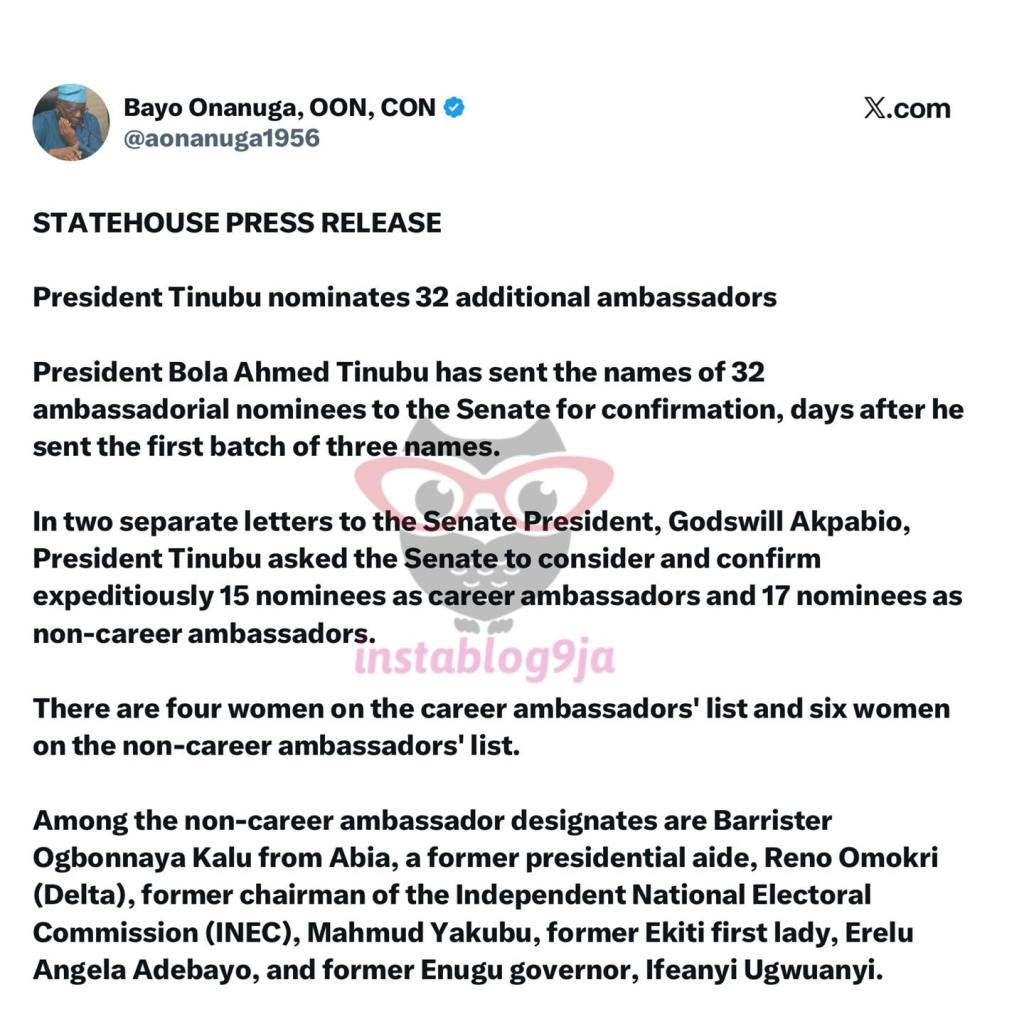
- The list names 32 nominees across career and non-career slots. They will await Senate confirmation before diplomatic postings abroad.
- The reaction adds to a wider debate on balance. Critics say appointments ignore merit and favour allies.
Oseni Rufai warned readers that the ambassadorial list looks like political patronage and favour. He posted comments online after the Statehouse press release listed 32 nominees for Senate review.

Rufai said the picks show appointments for friends, not merit or national need. His post echoed wider complaints about regional balance and fairness across the country. Igbo snub and regional concerns
Why critics are angry
The list named both career diplomats and non-career appointees for top posts abroad. Rufai noted that many appointees are former politicians or allies rather than career staff.
He singled out examples where political ties appear stronger than experience. Those concerns mirror other public voices calling for clearer selection rules.
Observers say Senate confirmation will be an early test of accountability. The upper chamber must vet nominees and ask for clearer reasons behind picks.
Civil society groups want public criteria for ambassadorial posts and fair balance. They argue that strong diplomats serve Nigeria best in key foreign capitals.
Some voices point to regional and gender balance as unresolved issues. Others say the president must explain how choices match national interest.
The debate is growing on social media and in broadcast shows nationwide. It centres on how appointments affect Nigeria’s image abroad and local trust.
Rufai concluded his post by urging public officials to prioritise merit. He asked for answers that would restore confidence in diplomatic picks. embassy passport and custody claim