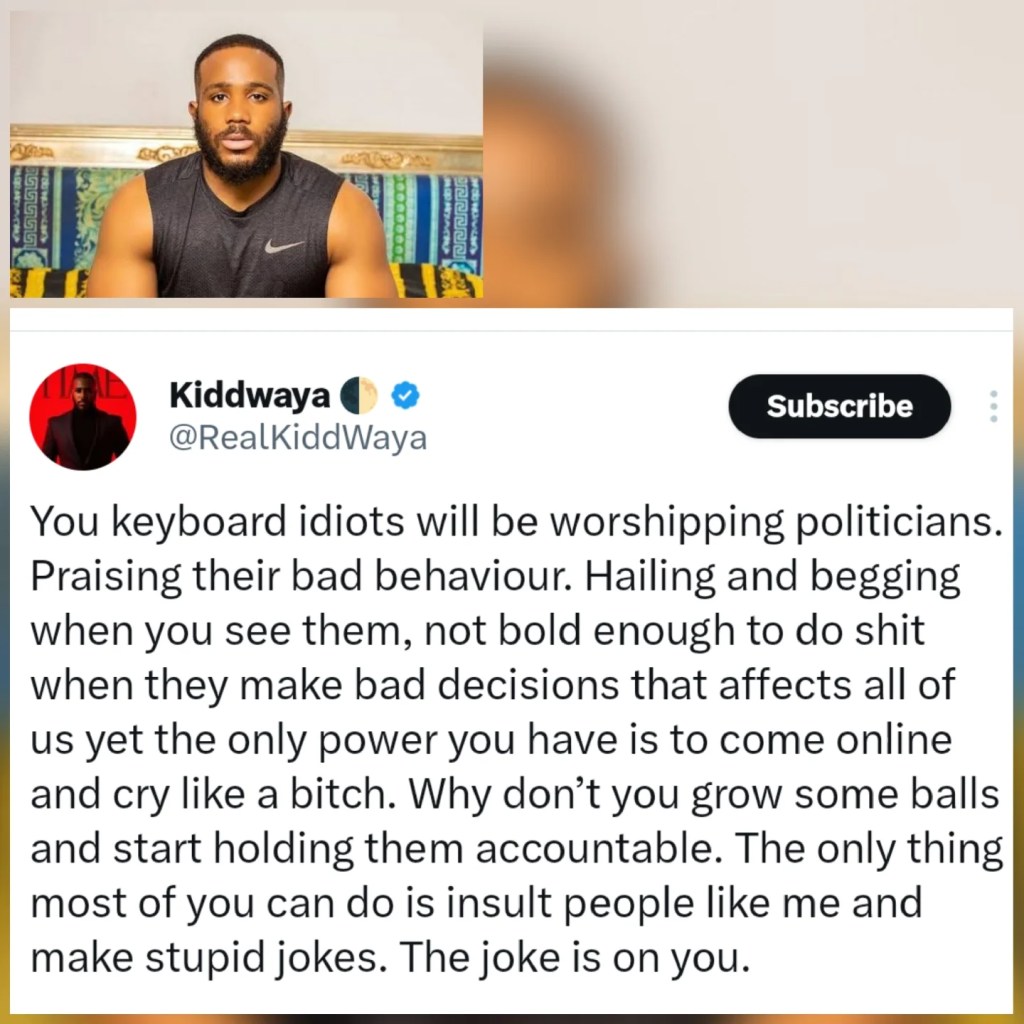
Key Points:
- Kiddwaya (Terseer Waya) says Nigerians hail politicians in person. He urges citizens to hold leaders to account now.
- Some users noted his father has political ties. Others asked what actions he has taken himself.
- Some agreed and said people complain online then move on. Comments showed mixed support and sceptical requests for proof.
Kiddwaya (Terseer Waya) issues sharp social media criticism

Kiddwaya (Terseer Waya) criticised Nigerians for praising politicians in public then only complaining online. He said many people hail and beg leaders when they meet them in person.
Online reactions mixed between agreement and challenge
Several users responded quickly to his remarks and debated his point strongly. One user noted Kiddwaya’s father has political ties and questioned his personal stance. Kiddwaya past interviews archive shows his past public comments and background.
Critics ask Kiddwaya to show concrete action
Other commenters challenged Kiddwaya to show what he has done personally to hold leaders accountable. A user directly asked for a single action example that could guide others now. Many replies mixed praise for his honesty with requests for practical steps.
Public habit of praise then online complaint persists
Some people said they see politicians praised at events and treated with respect in public. They then said those same people come online only to complain after bad decisions. This pattern, critics argued, reduces pressure on leaders and weakens demands for answers.
What civic accountability could look like now
Experts and engaged citizens say holding leaders to account needs concrete steps like petitions and petitions that demand answers.
People also pointed to peaceful protests, town halls and voter registration drives as practical ways to push for change. how Nigerians hold leaders accountable outlines civic steps and recent examples.
Conversation likely to continue online and offline
Kiddwaya’s post has kept the debate alive and showed how social media fuels quick reactions. The discussion highlights a deeper question about how public praise and private complaint affect civic pressure. Observers say clearer public demands and organised actions can change outcomes across Nigeria