
Key points
- She spots a shelf tag in a Lagos store. The label reads fifty thousand naira for one kilogram.
- Her screenshots capture shocked chats with followers about cost. She asks if the country is truly finished.
- Fans cite FX, imports and cold-chain risk for spikes. Others call berries a treat, not basic food.
Businesswoman Tania Omotayo has voiced shock at a Lagos store. She posted a close shot of fresh berries stacked in plastic packs. The shelf tag beside them showed ₦50,000 per kilogram.
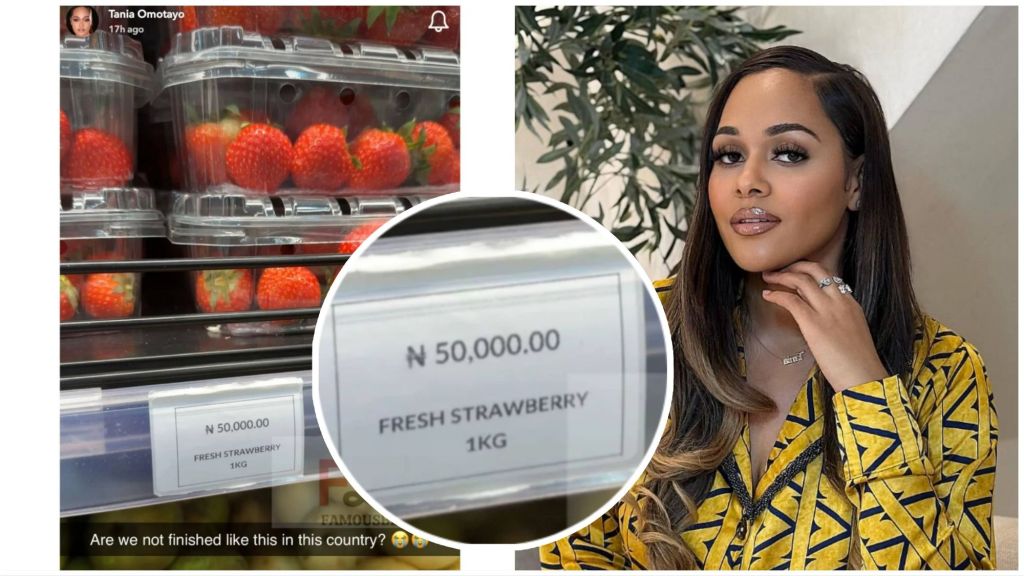
Her caption read, “Are we not finished like this in this country?” The post drew swift replies as shoppers shared price pain across stores. We recently reported a new petrol price warning, which hits transport costs.
What she posted
One follower asked, “Huh? as in 50,000 naira?” She replied, “Dazzz right, as in fifty whole thousand Nigerian naira, dear.” The shelf label beneath the packs read “Fresh Strawberry, 1kg.”
Strawberries in Lagos often travel long routes and need cold care. Stores price them higher due to speed, spoil risk, and demand. Many buyers now treat berries as a rare pick, not a staple.
Price signals behind the moment
Some users blamed FX swings and import bills for the jump. Others pointed to niche produce that spikes outside a short season. Policy watchers also note a naira strengthening outlook report, which could ease food costs.
Comments under her post ranged from humour to worry and fatigue. A few urged shoppers to stick with in-season local fruit. Several said the tag shows why treats now feel out of reach.
Supermarkets set prices by supply, rent, and logistics in each area. Shelf tags can change fast when stock turns or vendors switch. ValidUpdates could not verify the store’s final till price at press time.
Nigeria grows some berries on cooler plateau farms during certain months. Off-season weeks raise the need for quick moves and better storage. Those steps raise costs before fruit reaches a city shelf.
Many households already swap to local fruit with steady supply. Nutrition voices often stress simple picks that fit weekly budgets. Shoppers say such swaps help them spend less without losing taste.
Omotayo’s post sums up a daily debate on rising costs. It also shows how one label can spark big online talk. Readers will watch prices, FX trends, and store tags in the weeks ahead.