Introduction
Ikot Ekpong village (formerly Nto Ekpong) is presently a quashi-village in Adiasim Atai, Adiasim Clan in Essien Udim Local Government Area of Akwa Ibom State, Nigeria. Adiasim Atai is located on Latitude 5.09320 and Longitude 7.65150. The Time Zone (TZ) is Africa/Lagos and the Coordinated Universal Time (UTC) is UTC+1
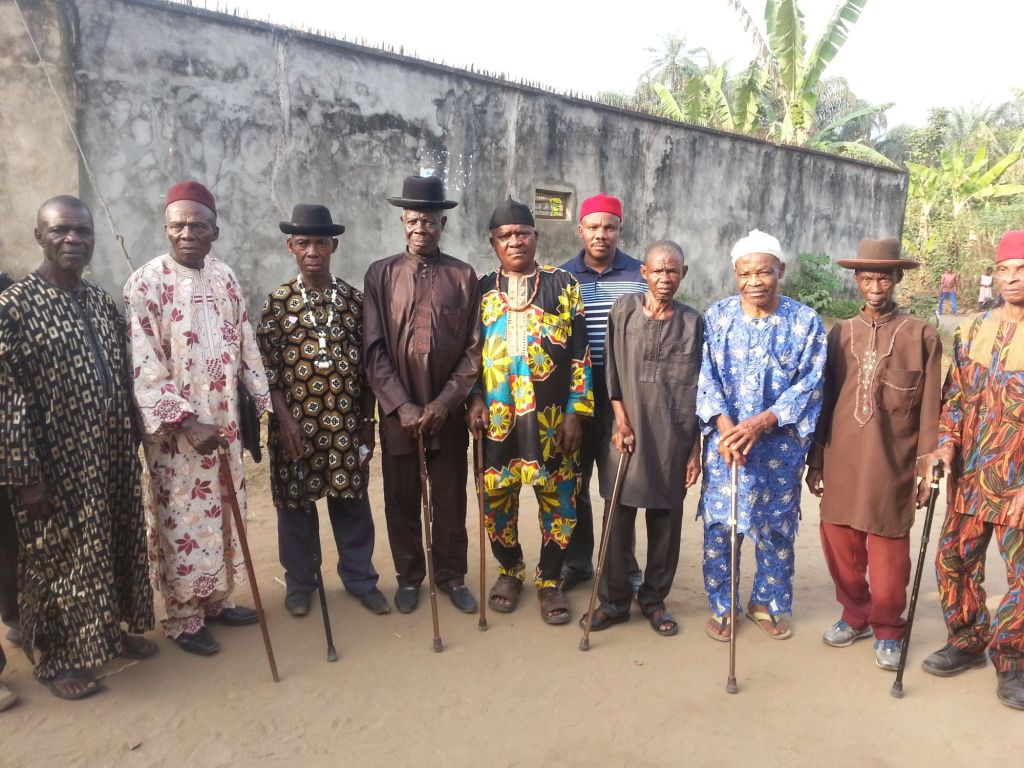
In 2006, during the Ikot Ekpong Council Chairmanship tenure of Chief Elder Udo Pius, himself and the then executive council conceived the idea of convoking a general assembly of Ikot Ekpong people. This general assembly was envisioned to be all encompassing; Men, Women, Youths and the Children regardless of political, educational, religious and social leanings were to gather to discuss the Ikot Ekpong; its Past, Present and Future. After wide consultation with Ikot Ekpong people at home, other parts of Nigeria and the Diaspora, this idea was discussed, examined and latter approved to be called “Ekpong Day”. This was considered a welcome development and everyone was expectant of the assembly and its deliverables.

After the acceptance and approval of Ekpong Day, another challenge was to agree on the day/date that will suit majority of the citizens to allow maximum attendance and participation. After another long and intensive consultation with all segments of the village and Diaspora, the last day of the year was approved. It was believed that majority of the people will come for Christmas and end of year festivities and therefore will be available to participate enmass on the celebration.
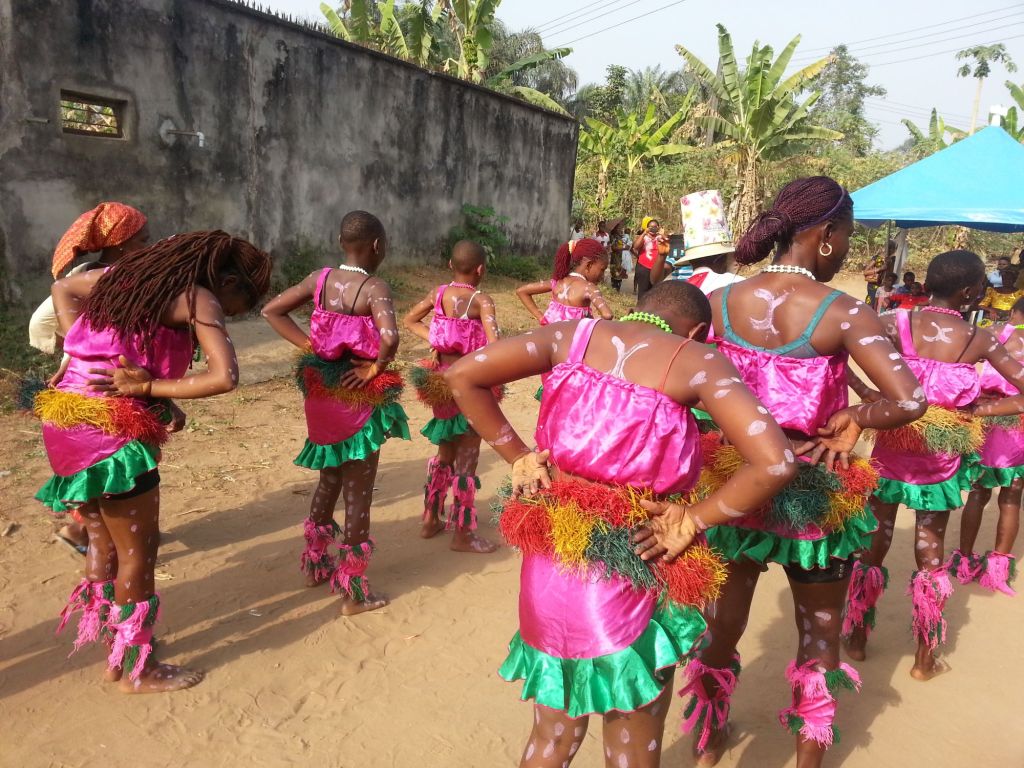
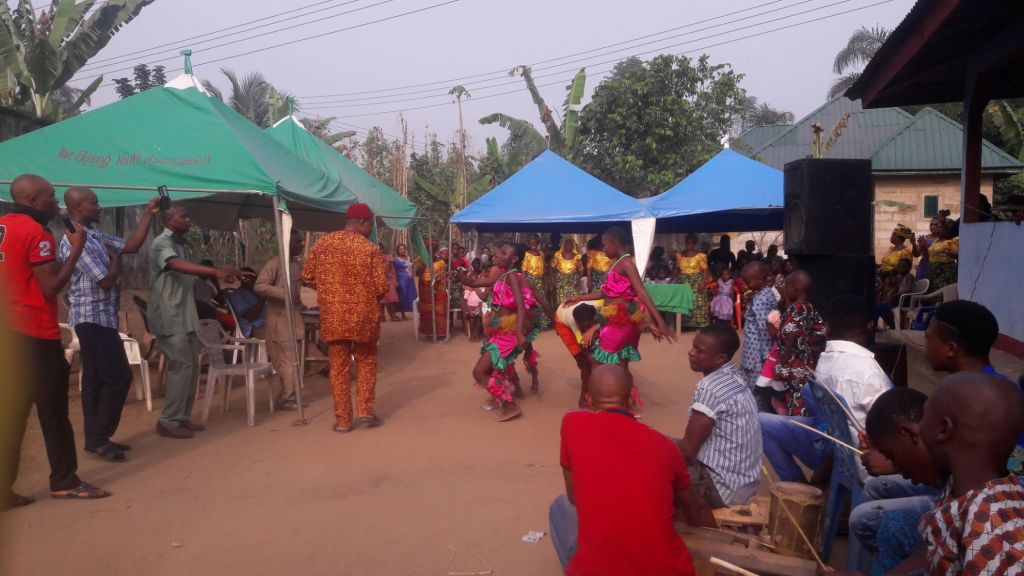
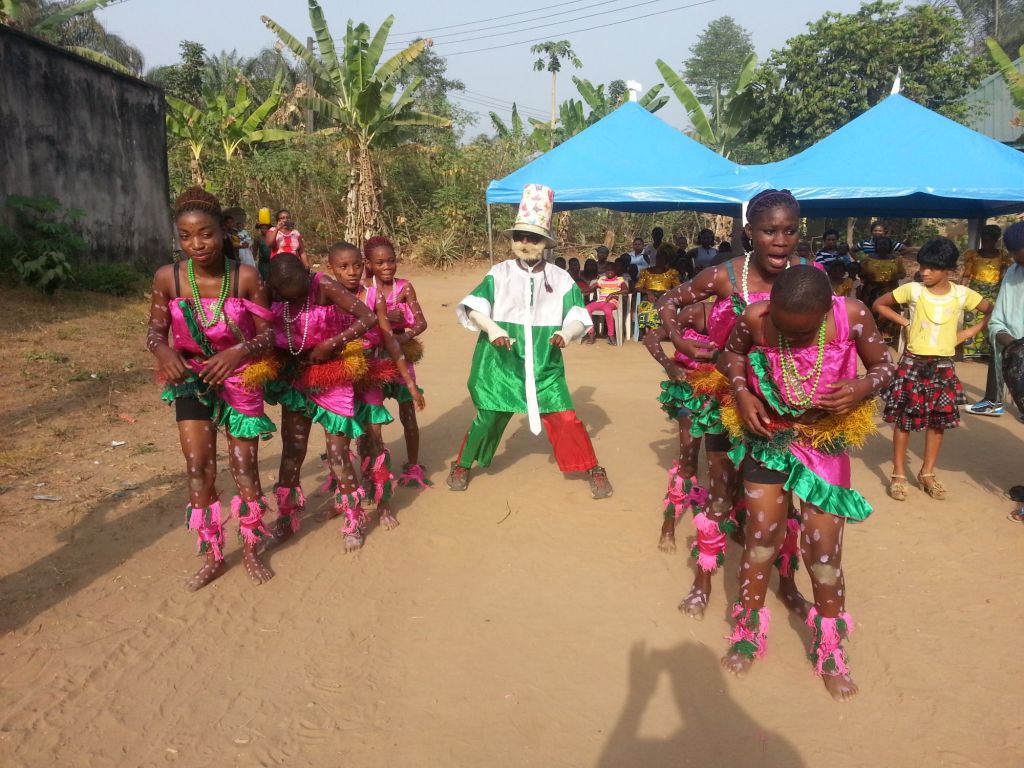
On December 31st 2008, the maiden edition of Ekpong Day was held at the Village council Square. In the build-up/preparation for Ekpong Day, there was a massive renovation including the painting and decoration of the village council. A facelift was given to the entire village with massive publicity. Invitations were extended to neighboring villages and clans. Very important personalities including the Clan Head of Adiasim His Royal Highness, Obong Sunday Udo Etok and some members of Adiasim clan council were in attendance, albeit briefly. It’s on record and on the lips of people that the debut Ekpong day was massively attended was very successful and the memories still lingers up till date.
As part of the facelift given to the village council, an art work was drawn on one of the walls depicting Ekpong, the progenitor of Ikot Ekpong. Since there is no available document containing the original picture of Ekpong, this artistic drawing raised fresh consciousness on who was Ekpong, how he looked like, his physical features and the like.
During the maiden edition of the event, it was unanimously agreed that the celebration should be made an annual event with the aim of bringing the indigenes of Ikot Ekpong at home and in Diaspora, together and closer for the purpose of fostering unity, love, togetherness and as a platform for discussing and proffering solutions to the problems confronting us as a people.
As chairman of the debut occasion, yours faithfully went home pondering on the significance of celebrating Ekpong Day. At this point, yours faithfully became quite thoughtful and inquisitive on how to unravel some history of Ekpong in order to draw information on how Ikot Ekpong came to be. The aim of this research therefore is to document some findings and share it with my generation and the generation unborn so that our rich history can be handed down from generation to generation. Additionally, this piece will hopefully form the bases and reference for further research, investigation and scholarly articles.
As typical of the first written work, I take a disclaimer of some information that may be found conflicting, contradictory or unproven. Aside from few resources referenced in this work, the information here were mainly obtained from oral history. Interviews were conducted from some elderly people within and without Ikot Ekpong community.
Chapter 1
Ikot Ekpong village (formerly Nto Ekpong) is presently a quashi-village in Adiasim Atai, Adiasim Clan in Essien Udim Local Government Area of Akwa Ibom State, Nigeria. Adiasim Atai is located on Latitude 5.09320 and Longitude 7.65150. The Time Zone (TZ) is Africa/Lagos and the Coordinated Universal Time (UTC) is UTC+1. Ikot Ekpong is surrounded by Ikot Ubom kindred to the North, Ikot Essien Eyen Village to the West, Ikot Ukana Village to the South and Ikot Inyang Village to the East. The population which is about 500 people is distributed on approximately 10,000 square meters of land space and comprises entirely Annang people with negligible foreigners/visitors settling in the village.
The day to day spoken dialect of the people is Central Annang with interjections of English Language or pidgin English. The elites also communicate fluently in English Language among themselves and non Annang speaking people. Some Ikot Ekpong people also speak Ibibio and Efik dialects especially those that have spent reasonable length of time in those areas.
Although the population has a seeming average distribution of males and females, the village is also experiencing an upsurge of youths and children possibly because of the uncontrolled birth rate.
Ikot Ekpene, Abak and Uyo are the nearest municipal cities to Ikot Ekpong with distances of about 5km, 6km and 10km respectively.
Like other Annang communities which are both Patriarchal and Semi-Matriarchal in nature (Ette, 2007), the village originated from a Patriarch called ‘Ekpong’ who was one of the descendants of ‘Adia-Esim’ which was later modified to Adiasim over time.
Chapter 2
Adiasim as one of the major clans of Annang stock played very pivotal role in the history of Annang land, its people and history. Most of the Annang historical landmarks and deities were and are still located in Adiasim till date. Examples are ‘Asaka-Iba Ajop’ in Ikot Ekon village, ‘Asukam Adiasim’ in Ikot Ukana, ‘Eka Ulo Ikot Ukana’ among others. These landmarks and deities are highly recognized and revered not only in Adiasim, but in most parts of Annang land till today.
There are several stories connected with the origin of the name ‘Adiasim’. Firstly, Esim is believed to be the historical father of what is known today as Adiasim. Oral history has it that Esim which can be literally translated to mean ‘tail’ also meaning ‘last’, was one of the numerous children of Annang whose birth position was the last.
From scholarly research, it is learnt that Annang migrated from Israel through Egypt and Ghana to the present settlement in the now South Eastern Nigeria which a recent political demarcation now named it Akwa Ibom State in South (Udo, 1983).
In traditional Annang society, family properties & belongings were mostly distributed according to birth position in the family. This means that the first son stands the right to have a lion share of the family belongings & wealth before consideration is given to the second, third and other sons. Because of his birth position, Esim was always allotted the last portion; hence his name “Adia Esim” which literally meaning “He that eats the tail” or “He that takes the last” In some cases, the last was always the least. For easy pronunciation, the name metamorphosed to what is known today as Adiasim.
Chapter 3
When ‘Esim’ became man enough to live on his own, get married and bear children, oral history has it that, the father and his elder brothers allotted a remote part of land to him to occupy and expand with his own family. Esim had no choice than to settle in the present day ADIASIM. Due to distance and how interior ADIASIM enclave was as at then, it was always difficult for his kith and kin to visit him. There was virtually no economic activity at the settlement location to attract people then. However, there was vast expanse of fertile land for Esim and his family to farm on.
Whenever anybody visit Esim, oral history has it that; he was always very happy and shows lavishing hospitality by offering his yams, cocoa-yams, palm fruits, plantains, bananas and other farm products including live livestock to his visitor(s) free of charge.
However, when other people got wind of Adiasim’s fertile soil, bountiful harvest and ceaseless hospitality, they trouped there to buy farm produce, livestock and also use the opportunity to trade some goods needed by Esim in form of trade-by-barter (Udondata & Idem-Agozino, 2001). History has it that the point of contact for the exchanges and trade later transformed to a mini-market.
As the volume of transactions increased with different people, hamlets, neighboring villages, communities and even visitors, the then mini-market grow and expanded in bounds. It is on record that the place that the said mini-market later metamorphosed to the present day great ABO or OBO Annang Market. ABO or OBO Annang market is undoubtedly, one of the famous, historical and biggest local markets in Annang land and indeed Akwa Ibom state where virtually every good is transacted. The market conspicuously shares the same boundary with Ukana clan and can be accessed through cities like Ikot Ekpene, Abak and Azumini, Aba in Abia State of Nigeria. Other clans/villages sorrounding the market are; Ukana Uwa, Ukana Iba, Ukana Ibogho, Nsasak, Ekpenyong Atai, Mkpatak, Afagha Obong, Afagha Esang and others.
The second theory has it that Adiasim was a center in Annang land and no matter where one came from, getting to that center for farming, trading are cultural celebrations gave it the name ‘Adia adisime’ (meaning where ever you are coming from, you must converge here) and later shortened to Adiasim. Adiasim was the center of many cultural celebrations like Ekpo and Ekong masqurades, Ese, Uta, Abang and Itembe traditional dances. While some are near extinct possibly because of development, education, technology and western religion, some of these traditional celebrations could still be found in Adiasim till date.
The third theory has it that, with Annang as semi-matriarchal community before colonialism; Esim had the first and only daughter called ‘Adiaha Esim’. This theory posited that it was ‘Adiaha Esim’ who founded and expanded the community and so her offspring became known as originating from ‘Adia-Esim’. ‘Adia’ is a short way of pronouncing Adiaha (meaning first daughter) in Annang. Overtime, the name metamorphosed to Adiasim (Ette, 2007)
Chapter 4
However, what is indisputable is the fact that during the British invasion of 1901 – 1903, Adiasim was the most populous clan in the whole of Africa (Perham, 1933). Because of its central location, the population, economic and commercial activities of Adiasim clan, the most populous market, Abo Annang, in the then South Eastern State of Nigeria evolved from the area. The market which still exists till today was also very popular and saw the Igbos, the Ibibios, the Efiks and the Ijaws buying and selling there. As at then, it was the only market that claimed to represent the whole of Annang, hence the name Abo Annang. This fact, according to Perham 1933, seems to be the common denominator reconciling the above theories. Adiasim was undoubtedly one of the traditional and historical economic and commercial hub of Annang people.
The people of Ikot Ekpong village in Adiasim; like other Annang people are very energetic, industrious and hardworking due to their traditional occupation of farming and trading. They are also hospitable, caring, loving and find delight in caring for visitors (Udo 2008). However, as a people that that historically survived various external attacks and invasion by neighboring villages, they are also known to display high level of violence and confrontation, in defense of their historical, territorial and traditional boundaries whenever their individual cum collective existence is put under real or potential threat.
This real or potential inclination may likely account for the reason why it is alleged that Ikot Ekpong people are known for having very sharp machetes as companions in anticipation of attacks. The ‘akankang’ as it was called in the olden days, was and is still believed to be one of the most potent companions and weapons with tremendous traditional, spiritual and supernatural powers of Ikot Ekpong.
Chapter 5
Oral history has it that the first son of Ekpong was killed through food poisoning by his (Ekpong’s) best friend at a very tender age. When he later begets another son, he (Ekpong) named him ‘Ami Mfioiyoke-agwo’ or ‘Mfioiyoke-agwo’ which is literally translated to mean ‘I do not trust anyone’; it could also be interpreted as ‘I cannot not vouch for anyone’.
Mfioiyoke-agwo eventually became the only surviving son of Ekpong out of all that he begets. It is believed that Ekpong lived and died at where is today known as ‘Anwa Nto Ekpong’ a local central square and tourist attraction where local and ancient artifacts and antiques were exhumed some years back in the village.
Over time, and because of the difficulty in pronouncing the lengthy name, the name ‘Mfioiyoke-agwo’ metamorphosed into what the present day villagers know as ‘Mfiok-agwo’. The name ‘Mfioiyoke-agwo’ is historically believed to have been tinkered by the neighboring villages and visitors in the course of interaction who may have found a little bit challenging pronouncing it. Hence what is known and written by all as ‘Mfiok-agwo’.
Although the number of children that Mfiok-Agwo begets could not be authoritatively ascertained, his first son (Uko) was a very strong and brave warrior who helped to protect his father’s hamlet against external attacks. Uko literally means strength and power. Oral history has it that, Uko a descendant of Annang, was one of the ferocious warriors of Annang land, hence the popular saying that Agwo Annang ade Agwo uko, meaning An Annang man is a powerful man or An Annang man is a man full of strength.
Uko who had 2 sons lost the first son named Akpan Uko to one of the external aggressions leaving him only with the second son named Udo Uko. Through the sacrifice of Uko, there was relative peace in Ekpong’s Kingdom and Adiasim community as a result of the giant strides made by Uko in protecting his father cum grandfather’s land from external invasion. With this conquest, Uko’s second son, Udo Uko was able to marry and expand the kindred with 5 male children namely;
- Akpan Udo Uko Mfiok-Agwo Ekpong
- Udo-Ekpo Udo Uko Mfiok-Agwo Ekpong
- Etok-Udo Udo Uko Mfiok-Agwo Ekpong
- Umana Udo Uko Mfiok-Agwo Ekpong
- Effiong Udo Uko Mfiok-Agwo Ekpong
Although still under research, unconfirmed oral narration has it that one of the above descendants of Mfiok-agwo is said to be an adopted child of Udo Uko Mfiok-agwo Ekpong. The said adopted child is believed to have taken refuge in Mfiok-agwo Ekpong kingdom probably due to inter community war that ravaged their ancestral village. Ekpong took him as a son with equal protection, rights and privileges while he was also helping Ekpong in his farm works and other activities.
The suspected ancestral home of the adopted child is said to have been traced to one of the historical settlements called ‘Ngwarigwa’ along Usung Urua Ekpo in the then colonial Abak local authority. It is also worthy of note that today, the village frowns intensely and forbids on anyone who, by acts of omission or commission, tends to do or say anything that has the semblance of discrimination against any of her kindred decendants. There are about 7 to 8 generations to the present day Ikot Ekpong.
Chapter 6
Ikot Ekpong village has expanded along the lines of these 5 sons that have become kindreds today. The five kindreds that make up today’s Ikot Ekpong are;
- Nto Akpan Udo Uko
- Nto Udo-Ekpo Udo Uko
- Nto Etok-Udo Udo Uko
- Nto Umana Udo Uko
- Nto Effiong Udo Uko
Each of the kindred have their heads (Chiefs) which in most cases is the eldest person in that kindred. However, all adult men in these kindred belong to the general Ikot Ekpong village council whose Chairmanship rotates among these kindreds. The Chairperson of the women group also rotates among the kindreds but not necessarily in the same order as their male counterparts. There is also a very strong and vibrant youth movement called Ikot Ekpong youth Association. The office of the President of the youth group in ikot Ekpong also rotates in these kindreds.
Bibliography
Ette, E. U. (2007) Annang Heritage Preservation Available http://www.annangheritage.org.
Ette, E. U. (2009) Annang Wisdom: Tools for Post-Modern Living. Bloomington, Indiana Xlibris Press.
Udo, E. U. (1983) The History of the Annang People, Calabar, Nigeria. Apcon Press Ltd.
Udondata, J & Idem-Agozino, U. (2001) Annang Orthography, Uyo, Scholars Press.
http://www.mapanet.eu/EN/postal_codes/?c=NG&n=4&r0=&r1=NG-AK&r2=17&r3=01&l=0
http://kwekudee-tripdownmemorylane.blogspot.fr/2013/06/annang-people-nigerias-artistic-people.html
About the Author
Obong Engr. Emmanuel Essien Udo (JP) leadership prowess started in the early days as a kid, being the 2nd born and 1st Son of the family of Chief Elder Essien Udo Udo Ekpo, Ikot Ekpong, Adiasim Atai, in Adiasim clan, Essien Udim L G A of Akwa Ibom State.

In his Primary school days, Emmanuel occupied a leadership position as the class monitor from Primary 3 to Primary 6 in the then Central Primary School, now St. Peter’s Catholic School Adiasim in Essien Udim LGA of Akwa Ibom State. This position made him always liaise closely with his Class teachers and Headmaster of the school.
During his Secondary Education at Kizito Comprehensive Secondary School, Adiasim in Essien Udim LGA of Akwa Ibom State between 1982 and 1988, he distinguished himself and became Assistant Class Prefect in JS3 and Class Prefect in SS1 and early SS2. Later in SS2 and throughout SS3, Emmanuel became the School’s Sanitary Prefect.
In 1988, just before graduation from secondary school, Emmanuel led his school as the First Speaker in a secondary school debate competition against St. Columbanus Secondary School, Ikwen in Obot Akara LGA of Akwa Ibom State at Cardinal Ekandem’s center, Ikot Ekpene. Emmanuel’s team/school emerged winners of the 1st prize
When it became mandatory for all students preparing for the maiden edition of Senior Secondary School Certificate Examinations to move into the school’s boarding facilities following governments implementation of the 6-3-3-4 educational system, the then School Principal, Sir J S Etteyit appointed Emmanuel to double as the Hostel/Dining Hall Prefect in addition to him being the school’s sanitary prefect. The additional responsibility, the Principal said, was due to Emmanuel’s sincerity and forthrightness. Emmanuel managed these 2 portfolios successfully till his graduation from secondary education.
Emmanuel proceeded to Federal Polytechnic, Idah in Kogi state where he read and obtained National Diploma (N.D) in Electrical/Electronic Engineering in 1992. After completing the mandatory 12 months industrial attachment with Shell Petroleum Development Company, Port Harcourt in 1993, he proceeded to the prestigious Institute of Management and Technology (IMT), Enugu, where he obtained Higher National Diploma (HND) in Electrical Engineering (Power & Machines) in 1996.
Emmanuel completed his mandatory one year National Youth Service Corps (NYSC) as a Physics and Mathematics Tutor in Army Day Secondary School, 302 Artillery Regiment Onitsha, Anambra State in 1997.
In 2012, Emmanuel proceeded to University of Wales in the United Kingdom where he bagged Post graduate Diploma (Pg. D) in Project Management.
In 2019, Emmanuel was admitted into the prestigious National Institute for Policy & Strategic Studies (NIPSS), Kuru, Jos, Plateau State, where he joined other Senior Civil Servants, Senior Military and Para-military Personnel to study Policy, Strategy & Leadership Course (PSLC 34) and Strategy Course for Command Responsibility (SCCR 7). Emmanuel finished as one of the best in class.
Emmanuel is an Engineer, a Public Servant, a community man and a patron to many youth organizations
Obong Engr. Emmanuel E. Udo (JP) is a registered electrical Engineer in Nigeria and has over 25 years experience working in the Oil and Gas sector in Nigeria, South Korea and Denmark.
As a grass root community leader and mobilizer, Obong Engr. Emmanuel E. Udo (JP) holds 3 chieftaincy titles as Utuene Ikang Ikot Ekpong, Obong Uforo 1 of Adiasim edem Akai, and Ohamadike of Oro-Igwe Kingdom in Rivers State. Obong Engr. Emmanuel Essien Udo (JP) is a proud son of Ikot Ekpong who takes pride in participation in all affairs of the village.
Photo Gallery