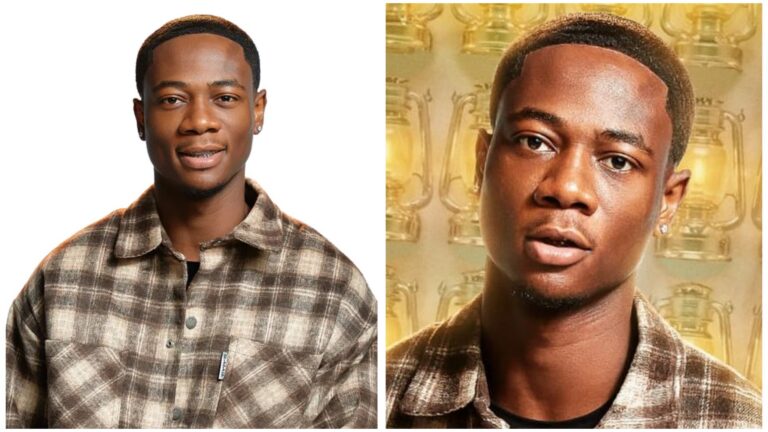
- – Brain Jotter addressed concerns about financial exploitation of Mike Ejeagha’s 1983 hit song “Onye Ori Utaba,” emphasizing he did not profit from the viral dance challenge.
- – He detailed how platforms like Instagram, Facebook, and YouTube manage copyright enforcement to ensure that the original owners, like Mike Ejeagha, receive the rightful earnings from their content.
- – Brain Jotter noted the challenge increased the song’s streams and disclosed giving Ejeagha two million naira from his own earnings as a goodwill gesture.

Popular Nigerian comedian and skitmaker Chukwuebuka Amuzie, better known as Brain Jotter, has recently addressed growing concerns about the potential exploitation of Mike Ejeagha’s 1983 hit song, “Onye Ori Utaba.”
The song, featuring the chant “Gwo Gwo Gwo Ngwo,” has become the soundtrack for a viral dance challenge that Brain Jotter initiated. As the song took social media by storm, questions arose about how revenue and copyright issues were being handled.
Brain Jotter took it upon himself to reassure fans and critics alike. In a video posted Tuesday, he explained that he had no financial gain from the viral trend. “For those who think we ripped him off or we’re making money from this whole thing, I understand your concerns and they are very valid. I appreciate the fact that you want him to get value for his hard work,” Brain Jotter said, emphasizing the importance of acknowledging Mike Ejeagha’s contributions.
Explaining content monetization
Brain Jotter went on to detail how monetization and copyright enforcement work on platforms like Instagram, Facebook, and YouTube. “No dime was made from this song by me, nothing like that,” he stated. He explained that revenue generated from the viral challenge was directed to Mike Ejeagha’s record label and production company.
“All those music where I did put out there – Instagram, Facebook, YouTube – everything, the whole revenue is going to Mike Ejeagha’s record label, his production company,” Brain Jotter clarified. He further explained how these platforms handle copyright violations to ensure the rightful owners receive their due earnings.
“You cannot even monetize another person’s song,” he added. “If I post that video on YouTube, YouTube strikes it for copyright and they give the revenue to the actual owner, which is Mike Ejeagha. If you post it on Facebook, Facebook will tell you outright that this song does not belong to you. They take the revenue and give it to the actual owner.”
Positive outcomes of the viral challenge
In addition to clarifying financial matters, Brain Jotter highlighted the positive impact of the viral challenge. “The song increased its streams on streaming platforms massively, and there’s no way I can put the song on streaming platforms. So everything, all revenues, are going straight to Mike Ejeagha,” he said.
Brain Jotter also disclosed a personal gesture of goodwill, revealing that he had given Mike Ejeagha two million naira from his own pocket. “The two million I gave him was from my pocket. My hard-earned money is just for humanity and not for profit,” he shared. This gesture was not motivated by profit but by a desire to support the music legend.
“We got the reward, which is the joy in his heart now. The joy in his heart now is my profit,” Brain Jotter concluded, expressing his gratitude for the positive emotions and happiness the challenge has brought to Mike Ejeagha and his fans. He emphasized that the objective of the viral challenge was to spread joy and celebrate the timeless work of a legendary musician.null